

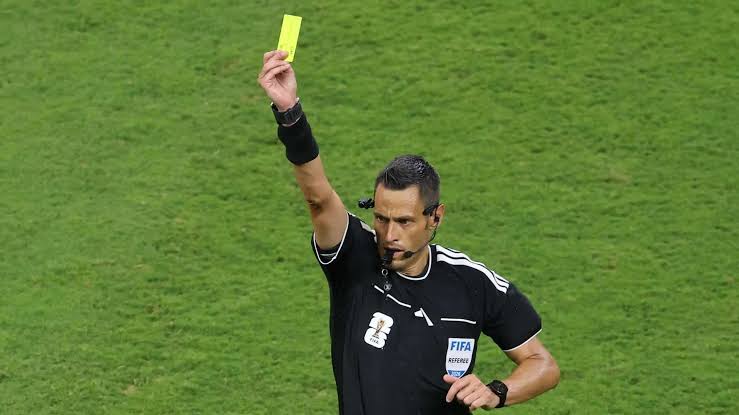
The Uruguayan Cup match between Nacional and Rentistas witnessed the testing of an unprecedented local trial, as referee Eduardo Varela used an electronic card instead of traditional yellow and red cards.
The test took place during Nacional’s 3-0 victory at the Gran Parque Central in the knockout stages of the professional phase, drawing widespread attention due to the peculiar appearance of the device, which resembles a smartphone.
Rentistas player Juan Pablo Plada became the first ever recipient of an electronic warning in the 12th minute following a challenge on Maximiliano Silvera, before the device was used to record further bookings as well as the dismissals of Rentistas manager Omar Asad and Nacional player Nahuel Gelos.
The device features two buttons on its sides—one yellow and one red. The referee presses the required color before raising the device, then selects the team logo, player number, and offense type on the screen to confirm the decision.
The electronic card alerts the referee if a player has already been booked, prompting whether to issue a red card upon showing a second yellow. It also enables the recording of substitutions, penalty kicks, VAR interventions, and allows changing card colors following a video review.
The prototype used weighs 148 grams with a thickness of seven millimeters, runs on Android with a long-life battery, and requires no internet connection during the match, as it logs each incident with its timestamp and uploads the data to an electronic server.
The card was originally scheduled for a trial during the Defensor Sporting vs. Plaza Colonia match on September 30, but the test was canceled due to poor color visibility under direct sunlight. Developers are currently evaluating the addition of side lighting to make decisions clearly visible to fans and broadcast cameras.
The device took three years to develop with private funding from the company “REFe,” while the Uruguayan Football Association’s role was limited to granting permission for the trial. The next step involves integrating the data directly with FIFA’s “COMET” system before considering expanding its use in official matches.