

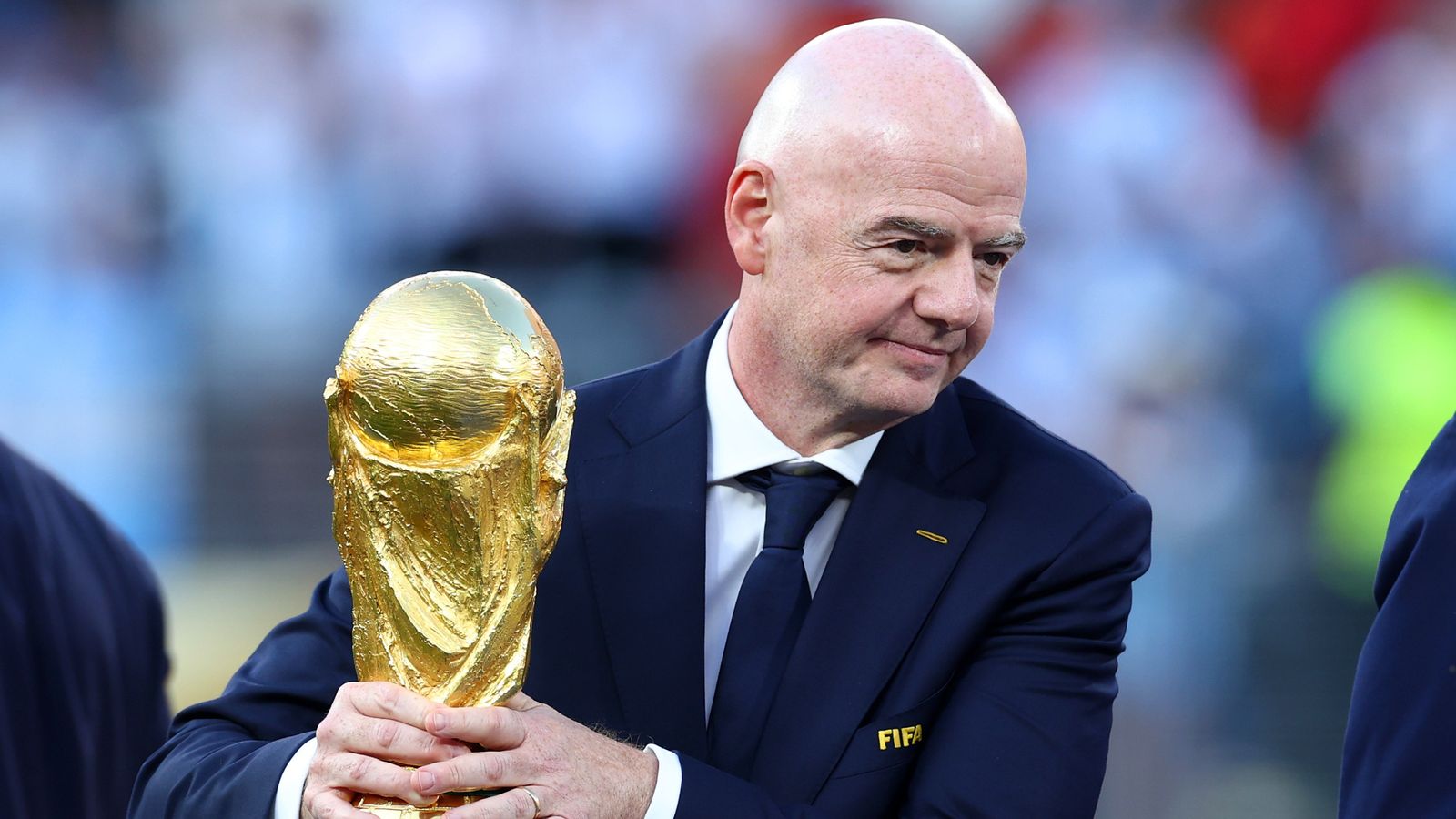
Relations between FIFA and UEFA have entered a volatile new phase of escalation. European football’s governing body has begun internal discussions regarding a potential boycott of FIFA competitions—including the 2030 FIFA World Cup—in opposition to Gianni Infantino’s controversial plan to sell commercial rights to private investors.
Under Infantino’s proposal, FIFA would create a commercial subsidiary named “FIFA Forward Enterprise” (FFE) to manage broadcasting rights, corporate sponsorships, and ticket sales for the men’s and women’s World Cups, as well as the FIFA Club World Cup. The new entity is projected to carry an initial valuation of $20 billion, with roughly 20% offered for purchase to private investors.
Thrive Capital and Political Backlash
Among the key private equity entities linked to the deal is Thrive Capital, founded by Joshua Kushner—brother of Jared Kushner, son-in-law of U.S. President Donald Trump. The inclusion of political and private equity figures has drawn sharp criticism, highlighting Infantino’s close alignment with the U.S. administration.
To secure support ahead of a September 19 deadline, Infantino offered an immediate $20 million payment to each national member association, with potential cycle funding rising up to $40 million. Non-supporting federations would receive only standard allocations. Critics have labeled this financial incentive an effort to buy votes ahead of the 2027 FIFA presidential election.
UEFA Calls Emergency Meeting as Opposition Grows
UEFA firmly rejected the proposal, issuing a public statement declaring that the World Cup “is not FIFA’s to sell”. The European body has summoned its 55 member associations to an emergency meeting to establish a unified stance, following consultation with key national federations including England, Spain, Germany, Italy, and France.
While a full tournament boycott has emerged from these discussions as a primary bargaining lever, no formal declaration has been finalized. UEFA’s stance has drawn backing from the Asian Football Confederation (AFC), CONCACAF, and European Leagues.
At the club level, the European Club Association (ECA)—representing over 850 clubs—expressed “deep concern” over the total lack of consultation. However, the ECA has stopped short of announcing a boycott, and major individual clubs have avoided standalone statements, preferring a unified response through representative bodies.
Objections Over Transparency and Calendar Congestion
Opponents argue that the plan lacks basic transparency and risks granting private investors undue influence over match schedules, tournament expansions, and competition structures to maximize financial returns.
Infantino is also facing mounting resistance over match calendar congestion, rumored proposals to expand the 2030 World Cup to 64 teams, and accusations of autocratic decision-making that sidelines confederations, clubs, and players alike.